
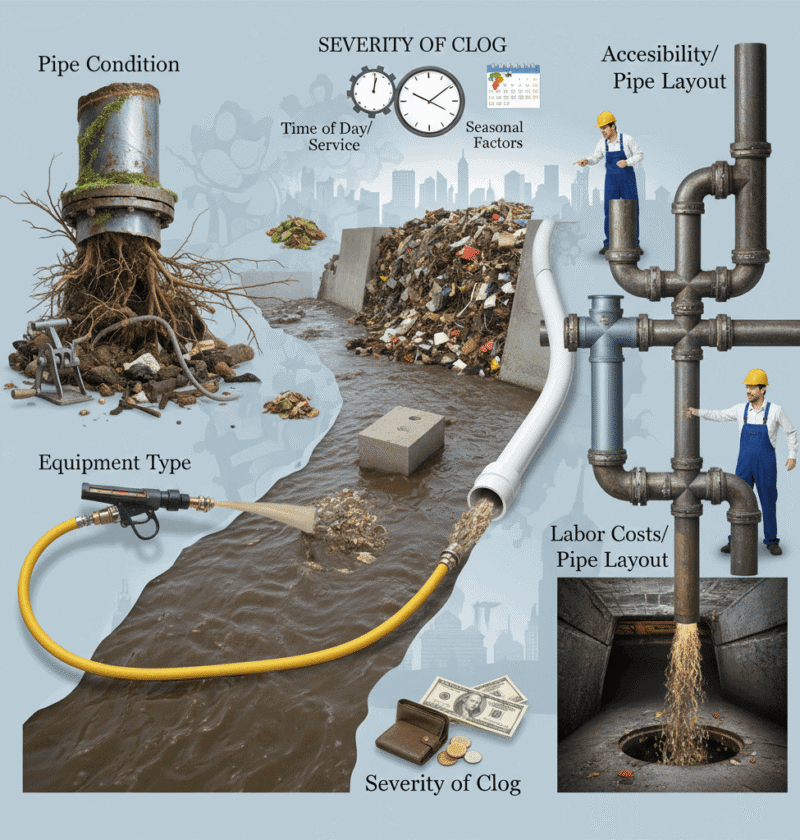
Clogged drains are one of those household problems that feel small at first and then become urgent fast. A slow kitchen sink or a bathtub that backs up after a shower can interrupt your day and raise questions about cost. Understanding the factors that influence drain clearing costs helps you make smarter choices, get fair quotes, and prevent repeat visits from a plumbing pro.
In this article I break down the main variables that affect what you will pay to remove a drain obstruction. You will find real examples, typical price ranges, and practical tips for lowering expenses without risking damage to your pipes. Read on to learn how technicians set their rates and what to ask before they start work.
Type of blockage and how it changes costs
Not all clogs are created equal. The material causing the obstruction, how compacted it is, and where it sits in the system all influence the time and equipment needed to clear it.
- Hair and soap scum in bathroom drains These are common and often removable with a mechanical snake or hydro jet for a modest fee. A technician may resolve the issue in 30 to 60 minutes.
- Grease and food buildup in kitchen drains Grease can stick to pipe walls and collect debris. Removal may require stronger tools and repeated passes, which increases labor time.
- Foreign objects and toys These sometimes require disassembling pipe traps. That labor drives cost up compared with a surface clog.
- Tree roots and mineral deposits These are deeper issues in the sewer line. Expect higher charges for camera inspection and root cutting, and possibly repair work if the pipe is damaged.
Location and access make a big difference
How easy it is to reach the clog affects both labor and the tools used. A sink trap under a cabinet is typically quick to access. A blockage deep in a slab or outside sewer line takes longer and often requires excavation or specialized equipment.
Example pricing ranges for access levels
- Easy access inside home with standard fixture removal 50 to 150 dollars
- Moderate access requiring camera inspection 150 to 400 dollars
- Difficult access such as outdoor main line or slab work 400 to 1500 dollars or more
Methods used to clear the drain and their cost impact
The technique chosen by a technician depends on the clog and the condition of the plumbing. Each method has tradeoffs that show up on the invoice.
- Hand auger or drum snake A flexible cable that breaks through or pulls out the obstruction. Lower cost for simple clogs but less effective on hardened deposits.
- Electric auger A powered version that cuts faster. Higher hourly cost but can reduce total time on tough clogs.
- Hydro jetting High pressure water scours pipe interiors and removes grease and deposits. It is effective but typically more expensive and is not recommended for fragile, older pipes.
- Camera inspection A sewer camera locates the clog and documents pipe condition. It adds to the bill but helps avoid unnecessary digging or guesswork and can prevent repeat service calls.
When a camera is a good investment
If you have recurring issues, slow drains in multiple fixtures, or you suspect tree roots, the camera fee pays off by directing the correct repair. It also provides evidence for warranty or insurance claims if the line fails later.
Pipe material age and condition
Older plumbing materials like clay or cast iron are more susceptible to cracks and root intrusion. Technicians must work more carefully, which can slow progress. Modern plastic pipes are easier to clear without causing damage, which lowers labor time.
During a service a plumber will evaluate whether clearing is sufficient or if a repair or partial replacement is the safer long term option. If replacement is needed, expect significant additional charges for parts and labor.
Time of service and emergency fees
When a drain is cleared during normal business hours rates are generally lower. Nights weekends and holidays commonly carry premium rates for emergency calls. A late night main line backup will cost more than a scheduled afternoon service.
- Typical emergency surcharge 50 to 150 dollars
- Weekend or holiday rates may add another 25 to 50 percent to standard fees
Labor rates and estimate practices
Labor makes up a large portion of the bill. Plumbers may charge a flat fee for common jobs or an hourly rate. Ask whether the quote covers diagnostic time and whether you will be billed for parts and travel separately.
- Flat fees provide predictability for simple tasks
- Hourly rates can be fair for complex issues but ask for an initial time estimate
Questions to ask before the technician starts
Request a breakdown of labor parts and any additional services such as camera inspection or hydro jetting. Ask how they will protect your floors and what cleanup is included. Clear communication avoids surprises on the final invoice.
Permits repairs and long term fixes
Sometimes clearing a drain is a temporary fix. If the problem is a collapsed pipe or roots that indicate structural failure, the technician may recommend a repair that requires permits or excavation. Those items increase cost but address the root cause and reduce recurring service fees.
Examples of escalation that raises cost
- Pipe lining or full replacement
- Sewer line excavation and replacement
- Installation of access points or cleanouts
Tips to lower drain clearing costs without causing damage
There are steps homeowners can take to reduce the chance of expensive repairs and lower the likelihood of repeat visits. Simple preventative care goes a long way.
- Use strainers in tubs and sinks to catch hair and food scraps
- Avoid pouring grease down kitchen drains. Collect grease in a container and dispose of it with your trash
- Run hot water after dishwashing to help move oils through the system
- Schedule a once a year inspection for properties with trees close to sewer lines
For clogs that are clearly minor you can try a plunger or a hand auger with care. Avoid chemical drain cleaners for older pipes because they can cause corrosion and make repairs more likely.
When to hire a professional and how to find fair pricing
If you have multiple slow drains foul odors backups or water pooling call a professional. A qualified technician will diagnose the issue and recommend the most cost effective solution rather than offering temporary fixes that return later.
When collecting estimates ask for a written breakdown and a range for the final price. Read reviews and ask neighbors or local community groups for recommendations. For local service options consider checking a provider that lists clear pricing and service details like Brightwater Plumbing services for reference.
What to expect during a service call
Standard service visits begin with a visual inspection and a simple test to determine whether the clog is localized or in the main line. If the tech has to perform a camera inspection they will typically explain findings and recommend the next steps. Ask for a copy of any camera footage or images for your records.
Warranty and follow up
Good companies offer a short warranty on the clearing work. Ask how long it lasts what it covers and whether a follow up will be provided at no charge if the same issue recurs shortly after service.
Keep records of the service date the techniques used and recommended follow up. This history helps future technicians diagnose chronic problems faster which reduces cost over time.
Conclusion
Understanding the factors that influence drain clearing costs gives you control when a clog occurs. The main variables include the type of blockage how accessible it is the method used to clear it the condition of your pipes and whether emergency or permit work is necessary. Camera inspection and hydro jetting add to the upfront cost but can prevent repeated visits and hidden damage. Asking the right questions before work starts and requesting a written price breakdown reduces surprises on the final bill.
If you are facing a clog think about the likely location how urgent the problem is and whether a quick DIY step makes sense. For persistent or complex issues contact a reputable plumber who can document the problem and recommend a lasting repair. Keep strainers and avoid grease down the drain to limit future expenses. Ready to get a professional opinion schedule an inspection and get a clear written estimate to compare options.
Contacting a qualified technician early often lowers total cost by preventing escalation. If you want help assessing a recent clog set up a service visit and ask for a camera inspection if the issue is unclear. A single well documented visit can save money over time and reduce disruption in your home. Take action now and get a clear price estimate before any work begins