Moving up from simple goldfish and guppies to the cool, colorful world of saltwater coral reef tanks means learning the ropes of aquarium plumbing. Reef tanks need steady water movement that never quits. That flow acts like the tank’s heartbeat, trading oxygen for carbon dioxide and hauling away waste from the corals and sea creatures. Without this constant water shuffle, the bright, lively reef would have a tough time staying healthy. Discovering this trick is perfect for hobbyists eager to see their reef tanks flourish, so keep reading to uncover the hidden magic working behind the scenes.
Flexible Line as well as PVC
When considering the plumbing of your fish tank, you have the option of establishing your system up with an adaptable line or PVC piping. Both have their benefits and also downsides.
The flexible line consists of rubber tubes, which can be curved into configurations far more easily than the strong plastic of PVC piping. This makes it practical for plumbing tiny fish tank configurations, where you don’t have great deals of areas to work out the plumbing information. This capacity to bend as you go also makes installing adaptable tubing easier and faster than PVC piping, and also it is additionally easier to replace the tubing if your fish tank system needs to unexpectedly spring a leak. To affix the tubes to your plumbing system, you will need to purchase clamps that coincide dimensions of the television.
On the flip side, the adaptability of tubing makes it a more reliant on kink, which can limit water circulation to your fish tank. This compels the return pump to function harder, thereby shortening the life of this piece of equipment. One more negative aspect is that a lot of flexible lines are clear, which can produce problems of natural development inside the tube if it is subjected to light for long.
For bigger tanks as well as situations where high pressure is part of the system, PVC pipeline is the most effective choice. PVC is made from rigid plastic, which doesn’t kink and also is a lot less likely to damage. Due to the fact that it comes in a range of dimensions, you can purchase straight tee installations, 45-degree arm joints, as well as 90 level joints, and develop a system that varies from a drain and return loophole right to a configuration that includes numerous fish tanks connected together by plumbing. Including more plumbing in your system is a simple procedure with PVC pipe parts. Also, PVC pipe is nontransparent, so you avoid algae development in your system.
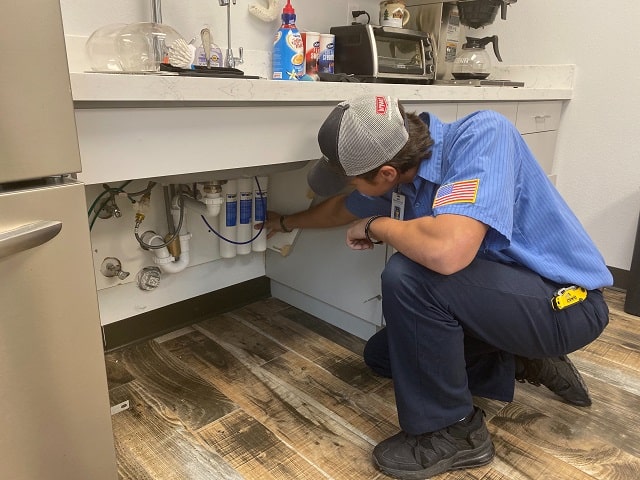
One downside to a plumbing system based on PVC piping is that the components are typically glued together. Unless you developed the system with a number of threaded connections screwed with each other, you will have to see the piping apart whenever your plumbing has a concern. Another downside to the PVC pipeline is its inflexibility. In some cases, the plumbing ends up sticking out more than adaptable tubes, which can hug the aquarium and be tucked out of the way.
Other Plumbing Pieces
Besides pipelines and connectors, you will need a few other items in a fish tank plumbing task. For example, good ball shutoffs allow you to control the circulation of water or perhaps shut the water off briefly. A ball valve opens and shuts using a swing arm, which relocates the fifty percent circle-designed plastic aspect inside the valve, raising or decreasing the quantity of fluid that can move via the hole in the shutoff. A PVC ball valve runs without making use of any kind of o-rings or washing machines, so it is much less likely to wear out.
For additional tips and information about emergency plumbing repair, check out their page for more info.